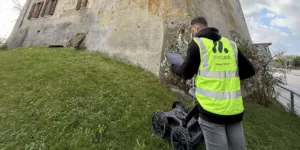
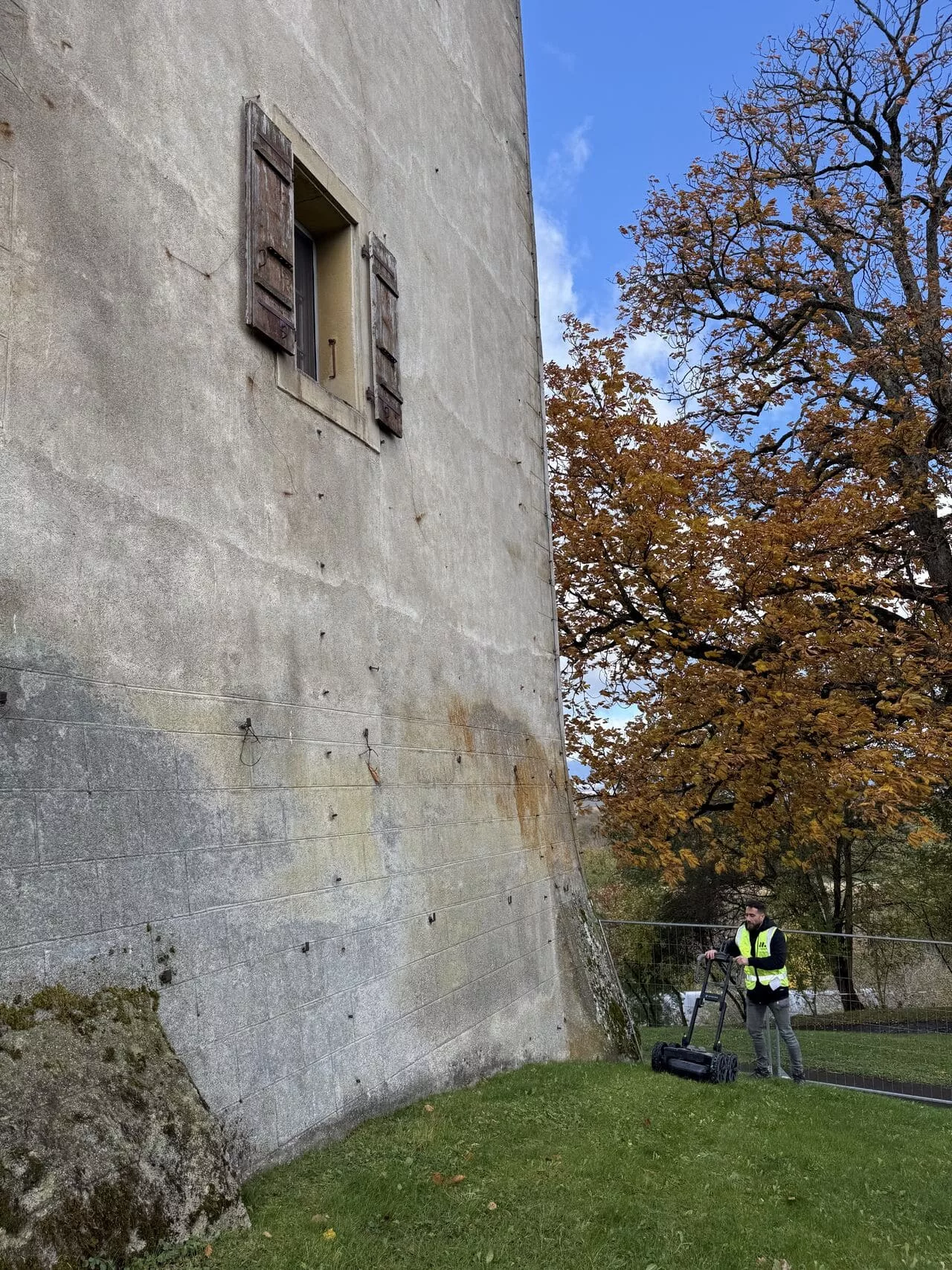
A biocementation geotechnical project is a ground improvement job where we first measure what the soil is really doing, then we stabilize it using a bio-based mineralization process, and we keep monitoring to confirm performance. At Medusoil, we start by reducing uncertainty. We do not “guess” the subsurface. We build a fast, reliable picture of the ground conditions, then design a low-pressure, low-viscosity consolidation strategy that fits the site constraints, including sensitive or heritage environments.

Why biocementation needs a better starting point than “minimum site info”
In geotechnics, it is common to begin with limited on-site information. That can be acceptable on straightforward sites, but many projects are not straightforward. Water presence can change bearing behavior. Geological heterogeneities can create uneven settlement risk. Cavities or voids can turn into sudden failure mechanisms. When the stakes are high, approximations cost time, money, and safety margin. This is exactly where non-destructive monitoring changes the project trajectory, because it provides actionable data early, without unnecessary disturbance to the ground or the structure.
Our approach: fast investigation, detailed understanding, then low-pressure consolidation
Medusoil has developed a minimally invasive workflow that integrates innovation at every step, from early diagnosis to execution and follow-up. The principle is simple: understand first, treat second, verify always.
We begin with a rapid diagnostic using advanced monitoring methods to capture the real state of the ground. This stage focuses on detecting water influence, mapping heterogeneities, and identifying anomalies that may indicate voids or complex stratigraphy. The goal is not “more data for the sake of data.” The goal is the right data to make the next decision obvious.
Once the diagnostic is complete, we move into a fine interpretation of soil variability. This step turns measurements into a treatment logic: where to intervene, how deep, and what performance targets are realistic for the site. In heritage contexts, this is especially important, because constraints often limit heavy equipment, aggressive drilling, or high-pressure methods.
Then comes the consolidation phase, implemented at low pressure with low-viscosity injection compatible with our biocementation technology. The low-pressure approach helps control the treatment and reduce risk to adjacent structures. The low viscosity supports penetration through the pore network, which is critical when you want uniform improvement instead of localized “hard spots.” The result is a stabilization strategy designed to be durable, safe, and adapted to real ground conditions, not assumptions.
Monitoring and verification are part of the project, not an add-on
A biocementation geotechnical project should not end when the execution team leaves the site. Performance needs to be confirmed. We therefore integrate follow-up monitoring to compare the ground response to the initial baseline and to the design targets. If adjustments are needed, the plan can be refined based on measured reality. This is how we de-risk complex sites and deliver solutions that engineers can trust.
Next step
If you are planning a biocementation geotechnical project, share a short site description, constraints, and what you need to stabilize (soil layer, heritage structure, platform, embankment). We can propose an investigation-first path and outline how monitoring, design, execution, and verification would be structured for your case.