
Moderate Strength, Major Impact
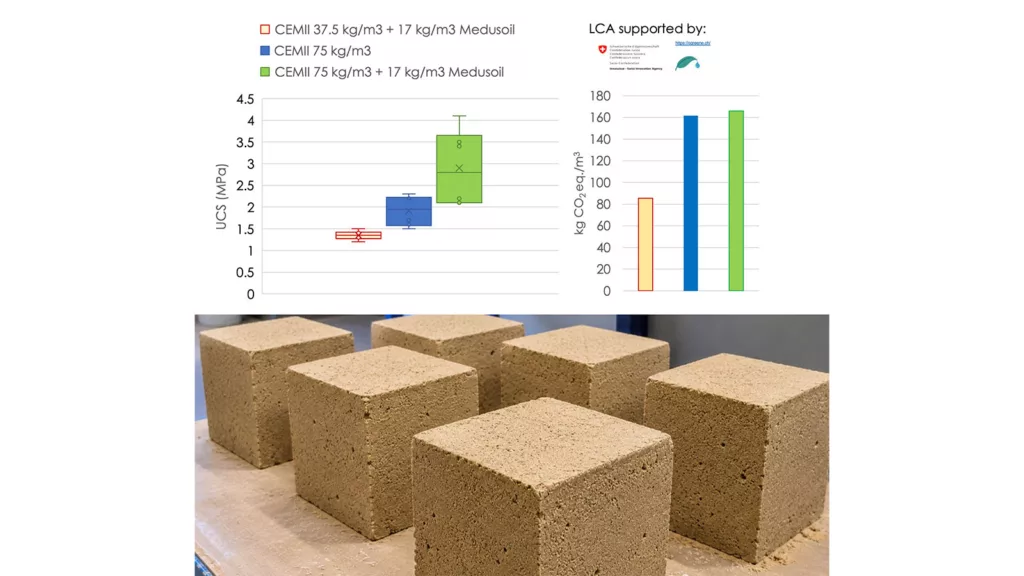
Many construction applications — including soil stabilization, trench backfills, erosion protection and excavated soil reuse — require less than 5 MPa of compressive strength. For these uses, performance is not only about strength. Materials must also interact effectively with soils and water while reducing environmental impact. Medusoil’s biomineral binder technology enables low-carbon formulations using local […]
Soil reinforcement at the Château Saint-Barthélemy
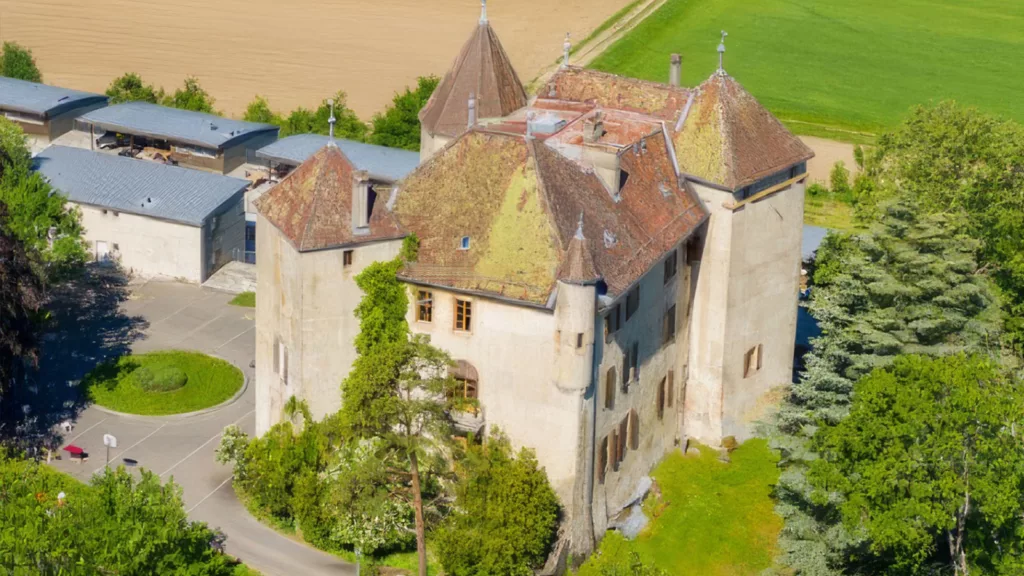
𝐏𝐫𝐞𝐬𝐞𝐫𝐯𝐢𝐧𝐠 𝐚 𝐡𝐢𝐬𝐭𝐨𝐫𝐢𝐜 𝐛𝐮𝐢𝐥𝐝𝐢𝐧𝐠 𝐰𝐡𝐢𝐥𝐞 𝐞𝐟𝐟𝐞𝐜𝐭𝐢𝐯𝐞𝐥𝐲 𝐚𝐝𝐝𝐫𝐞𝐬𝐬𝐢𝐧𝐠 𝐜𝐨𝐦𝐩𝐥𝐞𝐱 𝐠𝐫𝐨𝐮𝐧𝐝 𝐜𝐨𝐧𝐝𝐢𝐭𝐢𝐨𝐧𝐬: 𝐭𝐡𝐢𝐬 𝐰𝐚𝐬 𝐭𝐡𝐞 𝐜𝐡𝐚𝐥𝐥𝐞𝐧𝐠𝐞 𝐭𝐚𝐤𝐞𝐧 𝐨𝐧 𝐛𝐲 𝐌𝐞𝐝𝐮𝐬𝐨𝐢𝐥 𝐚𝐭 𝐂𝐡â𝐭𝐞𝐚𝐮 𝐒𝐚𝐢𝐧𝐭-𝐁𝐚𝐫𝐭𝐡é𝐥𝐞𝐦𝐲 𝐢𝐧 𝐒𝐰𝐢𝐭𝐳𝐞𝐫𝐥𝐚𝐧𝐝. As part of the restoration of Château Saint-Barthélemy, Medusoil contributed in 2025 to an initial phase of ground improvement works aimed at strengthening and stabilizing the soils beneath and around the foundations […]
Soil improvement to mitigate differential settlements
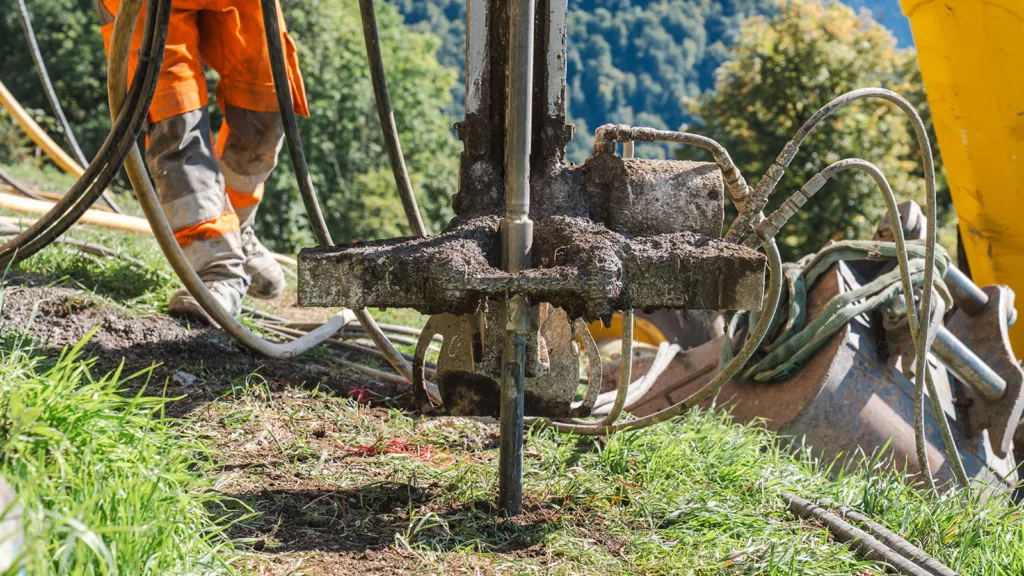
Over the coming weeks, we will be sharing a series of case studies showing how 𝐛𝐢𝐨𝐜𝐞𝐦𝐞𝐧𝐭𝐚𝐭𝐢𝐨𝐧 addresses complex 𝐠𝐞𝐨𝐭𝐞𝐜𝐡𝐧𝐢𝐜𝐚𝐥 and 𝐠𝐞𝐨𝐞𝐧𝐯𝐢𝐫𝐨𝐧𝐦𝐞𝐧𝐭𝐚𝐥 challenges. We begin in 🇨🇭Switzerland, with a demanding intervention beneath a 🏰historic masonry wall located on a steep slope within a 💧🌱groundwater protection zone S3. The objective: stabilize weathered sandstone and mitigate differential settlements […]
Metrics that matter: Low carbon footprint Zero waste.
Two years ago, at World Economic Forum (WEF), carbon credits faced an unprecedented setback. That moment made one thing clear: there is no credible sustainability without cutting emissions at the source starting with materials innovation. 𝟮𝟬𝟮𝟱 𝗵𝗮𝘀 𝗯𝗲𝗲𝗻 𝗮 𝘁𝗿𝗮𝗻𝘀𝗳𝗼𝗿𝗺𝗶𝗻𝗴 𝘆𝗲𝗮𝗿 𝗳𝗼𝗿 𝗠𝗲𝗱𝘂𝘀𝗼𝗶𝗹 𝗶𝗻 𝘁𝗵𝗶𝘀 𝘀𝗲𝗻𝘀𝗲. Not because we refined how we report emissions, but […]
Medusoil Winter News 2025: Year-End Highlights & Season’s Greetings

✨ Season’s Greetings and ❄️ Winter news from Medusoil! 🎄 As 2025 draws to a close, we’re taking a moment to reflect on a year of growth, innovation, and meaningful impact. We’re deeply grateful for the support of our community — clients, partners, collaborators, & friends — who have been central to our journey toward […]
Biocementation Wall Stabilization: Eco-Friendly Soil Improvement at Caux Palace
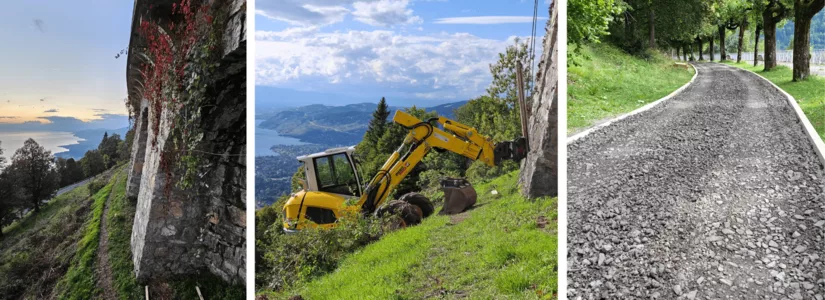
Biocementation wall stabilization provides a sustainable alternative to traditional grouting methods for historic structures and heritage sites. This case study examines how Medusoil applied biocementation technology to stabilize the historic wall at Caux Palace, Switzerland, reducing carbon emissions by 60% compared to conventional cement injection while improving soil strength and preventing differential settlement. Key outcomes: […]
Biocementation geotechnical project: how Medusoil starts with data, then stabilizes the ground
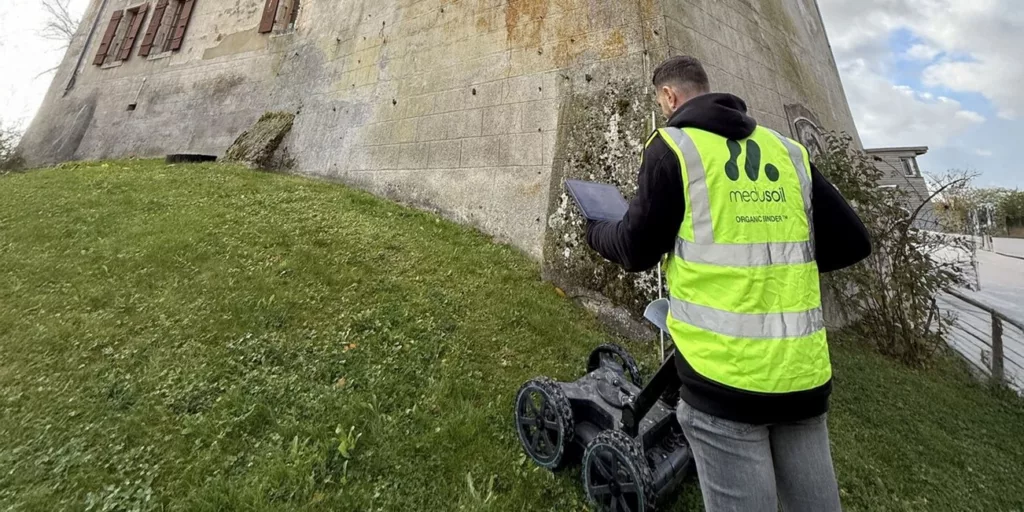
A biocementation geotechnical project is a ground improvement job where we first measure what the soil is really doing, then we stabilize it using a bio-based mineralization process, and we keep monitoring to confirm performance. At Medusoil, we start by reducing uncertainty. We do not “guess” the subsurface. We build a fast, reliable picture of […]
How to reduce dust on a mining site without toxicity or wasted water
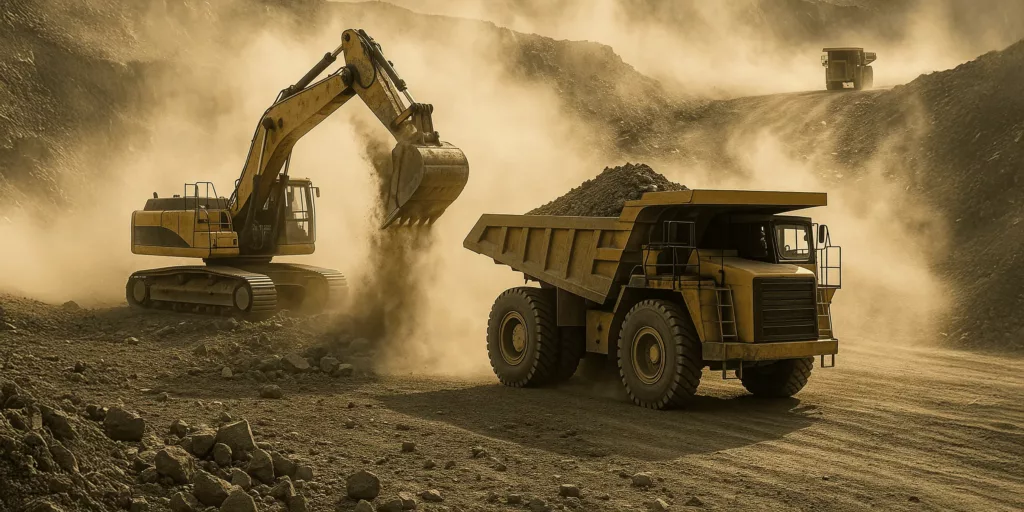
Dust remains one of the biggest challenges on a mine site.It impairs visibility, wears out machinery and affects workers’ health.To remedy this, most sites still use continuous watering or chlorinated salts (CaCl₂, MgCl₂).Expensive, short-lived and often harmful to the environment. This article aims to explain the principles and potential of biocimentation for dust control, based […]
Exploring biocementation on peat soils: a first step for SBB, Medusoil, and AMIGA (Group GVH, Institute Géotechnique, Monod-Piguet + Associés, ATB)
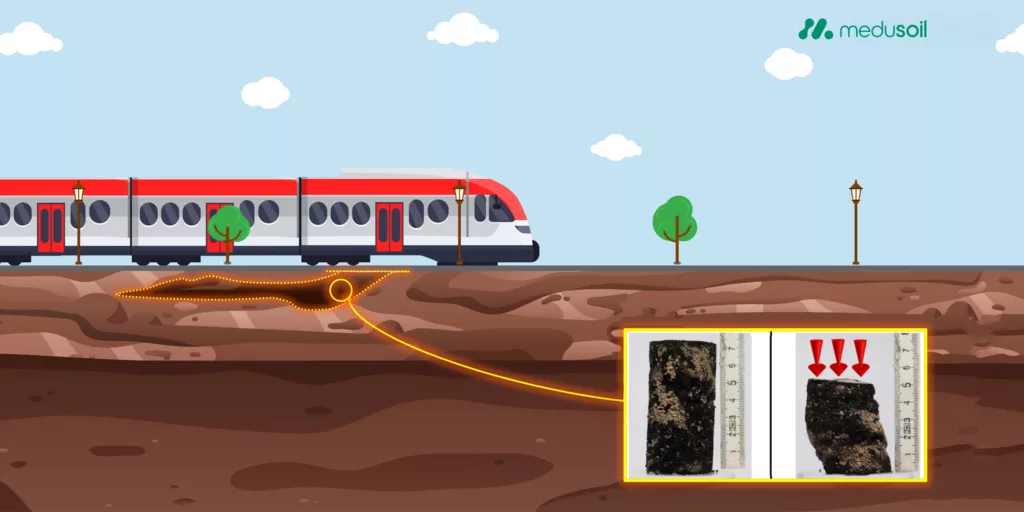
Peat soils are known in construction for their softness, high water content, and tendency to undergo large deformations under loads—factors that often complicate groundworks and infrastructure development. In a recent collaboration between Swiss Federal Railways (SBB/CFF), Medusoil, and the AMIGA group, a practical question was addressed: Can peat soils respond positively to biocementation, or do […]
A step forward in CO2-responsive construction materials
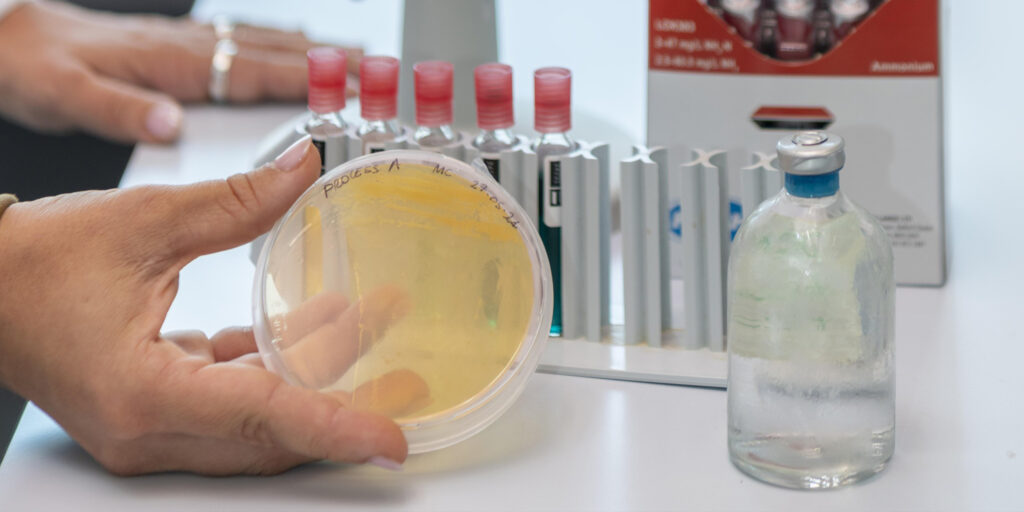
CO₂-Responsive Construction Materials: Capturing Emissions through Biomineralization Medusoil is pioneering a new class of nature-based solutions: a bio-cement that actively captures and mineralizes atmospheric CO₂. By leveraging microbial activity, this innovative technology provides a path toward carbon-neutral and carbon-negative construction for geotechnical and building applications. The Science: Carbon Drawdown through Microbial Activity At the core […]


